
On a Friday night at Jaber Al-Ahmad International Stadium。the floodlights don't just illuminate a pitch—they expose a contradiction. Thousands of fans chant in perfect unison, their white dishdashas a sea of unity, yet the national team's FIFA ranking hovers stubbornly outside Asia's top ten. Kuwaiti football lives in this tension: a nation with a rich sporting pedigree and a fiercely loyal fanbase, constantly grappling with the gap between expectation and output.
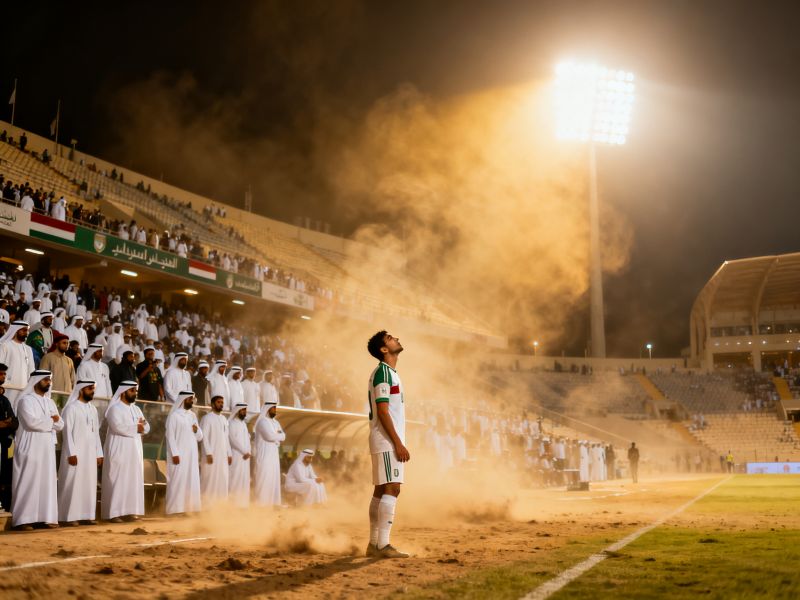
Rewind to the 1980s. Kuwait was Asia's darling. The 1980 Asian Cup triumph on home soil, the iconic 1982 World Cup appearance in Spain—those weren't flukes. They were the product of a deliberate, well-funded youth system and a domestic league that attracted regional talent. I remember watching old tapes of that era: the fluid passing, the fearless attacking. It felt like a blueprint for sustained success. But somewhere along the line, the machine stalled. The reasons are layered and often uncomfortable to discuss. Infrastructure decayed. Administrative turnover became a running joke—coaches cycled through faster than the desert heat. And the league, once a launchpad。turned into a comfort zone where mediocrity was richly rewarded.What strikes me most is the paradox of resources versus results. Kuwait has no shortage of money or passion. The Kuwait Football Association has。at times, poured millions into foreign coaches and lavish camps, yet the grassroots pipeline remains leaky. Talented kids from Al-Jahra or Fahaheel often lack consistent scouting and structured pathways. I've spoken to local coaches who shake their heads at the lack of certified youth trainers. Meanwhile, the national team's recent Asian Cup qualifiers have shown flashes—a gritty draw against Jordan, a late winner against Nepal—but consistency is a stranger. You get the sense that the talent is there, buried under layers of bureaucracy and short-term thinking.The domestic league tells its own story. Al-Qadsia and Kuwait SC dominate, their rivalries electric, but the gap between the top two and the rest is a canyon. Matches often devolve into physical scraps, with little tactical nuance. Foreign imports, while exciting, sometimes stifle local development—why groom a 19-year-old when you can sign a proven Brazilian for a season?
This short-termism echoes the national team's woes. Yet。there's a counter-narrative emerging. The federation's new technical director, a quiet German with a background in youth development, has begun restructuring age-group teams. Small steps, but tangible. The under-23 side's recent Gulf Cup semi-final run offered a glimpse of what structured preparation can yield.What does the future hold for Kuwaiti football?
I won't pretend to have a crystal ball. The fan culture is undeniable—the away support in Basra last year was louder than the home crowd. That passion is an asset. The challenge is converting it into structural change: better coaching education, a competitive league that rewards youth, and patience from administrators who often panic after two bad results. The road back to Asia's elite is long and unpaved. But if the 1980s proved anything, it's that this small nation can punch above its weight when the pieces align. The question is whether the will exists to assemble them again.